




The biggest airports in the world are defined by land scale and long-term spatial planning. These airports occupy vast tracts of land and influence how cities and regions plan for future growth.
This article ranks the world鈥檚 biggest airports by land area, featuring the 11 largest airfields on the planet. Let鈥檚 look at the massive global air hubs in 2026, whose vast footprints reveal how countries plan for growth decades in advance.
Note: Rankings are based strictly on total land area, not passenger traffic or flight movements. Passenger figures are included for context and reflect the latest available annual data.
1. King Fahd International Airport: Biggest Airport in the World

At 299.6 square miles, the in Dammam, Saudi Arabia, is the biggest airport in the world by land area. Its footprint is so large that it exceeds the total area of many major cities. Large portions of the site remain open, with space reserved for future terminals and industrial expansion.
- Location: Dammam, Saudi Arabia
- Land area:
- Annual passenger traffic:
- Aircraft movements: 446,000 flights (2024)
- Cargo volume: 606,000 metric tons
- Number of runways: 2
- Number of terminals: 1 main passenger terminal with 2 supporting facilities
- Destinations served: 56 destinations in 22 countries
- Construction period: 1976-1999 (23 years)
The King Fahd International Airport was planned as a long-term aviation reserve. Aircraft operations occupy only a fraction of the total land.
This planning philosophy also explains why the DMM handles fewer passengers than many smaller airports. As of 2026, no airport in the world matches the sheer physical scale of King Fahd International Airport.
2. Denver International Airport: North America鈥檚 Largest Aviation Footprint
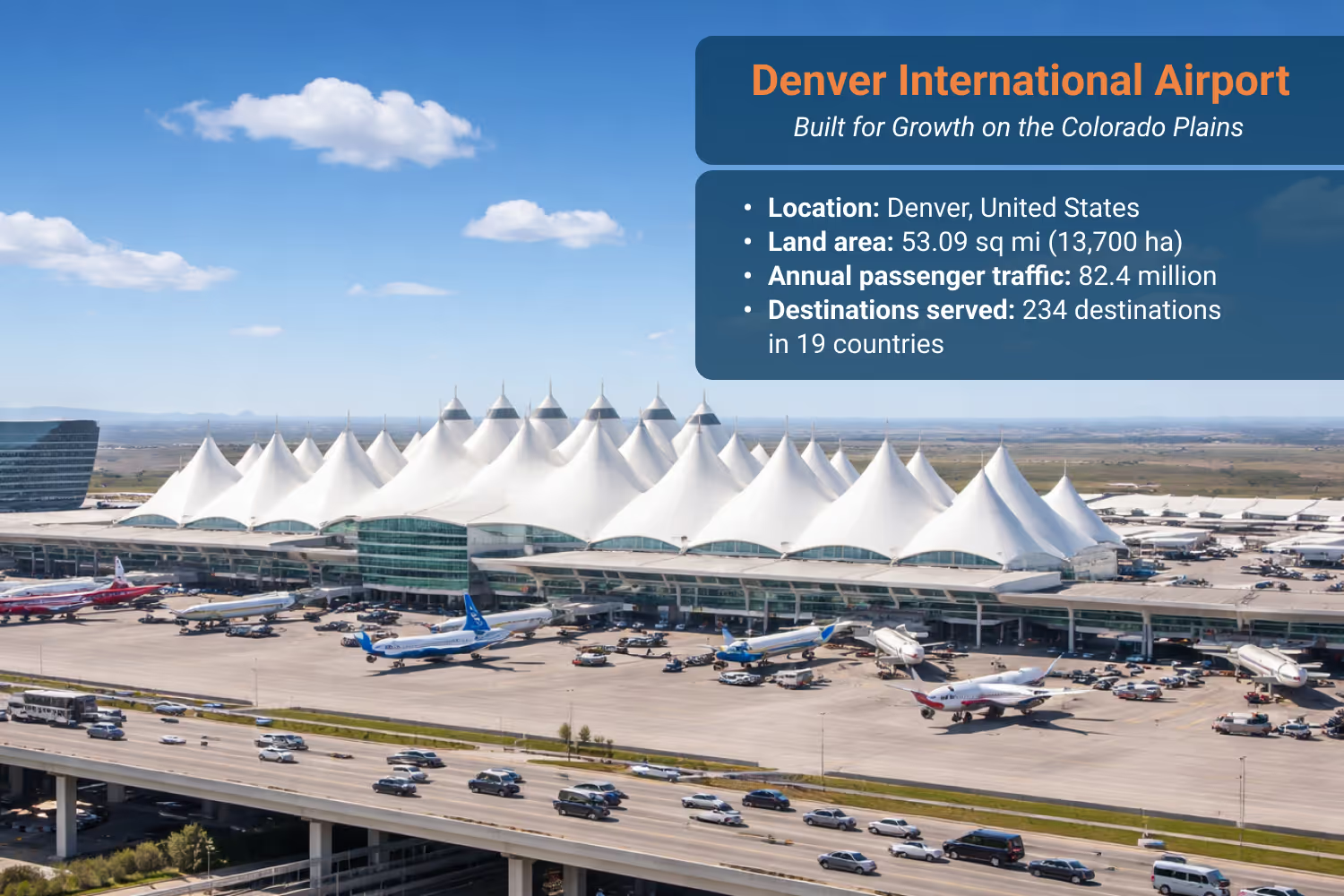
The in Colorado, United States, extends across 53.09 square miles and is the second-largest airport in the world. The airfield stretches across open plains east of the city. The land area of the DIA is more than double that of Manhattan.
- Location: Denver, United States
- Land area:
- Annual passenger traffic:
- Aircraft movements: 694,900 flights (2024)
- Cargo volume: 366,000 metric tons
- Number of runways: 6
- Number of terminals: 1 main terminal with multiple concourses
- Destinations served: 234 destinations in 19 countries
- Construction period: 1989-1995 (6 years)
The Denver International Airport has become the by nonstop destinations. Airline investment and its central location have since supported that growth. Its growth has focused on route expansion rather than land use.
On February 6, 2026, the DIA hosted the annual inside the Jeppesen Terminal. The event turned part of the sprawling main terminal into a vibrant temporary adoption space.
3. Kuala Lumpur International Airport: Vast Aviation Landscape in Southeast Asia

The in Selangor, Malaysia, stretches 39 square miles and stands as one of Southeast Asia鈥檚 largest aviation sites. The airport sits far from dense urban areas. This location allowed planners to build parallel runways and large terminal zones.
- Location: Selangor, Malaysia
- Land area:
- Annual passenger traffic:
- Aircraft movements: 819,000 flights (2023)
- Cargo volume: 794,900 metric tons
- Number of runways: 3
- Number of terminals: 2 main terminals with satellite facilities
- Destinations served: 146 destinations in 39 countries
- Construction period: 1993-1998 (5 years)
The Kuala Lumpur International Airport is now the most connected airport in Southeast Asia. It offers one of the region鈥檚 widest route networks. KUL also ranks as the by passenger traffic.
For many travelers, this large airport also functions as a practical transfer hub and a starting point for multi-country travel across Southeast Asia.
4. Istanbul Airport: Transcontinental Hub Built on Extraordinary Scale
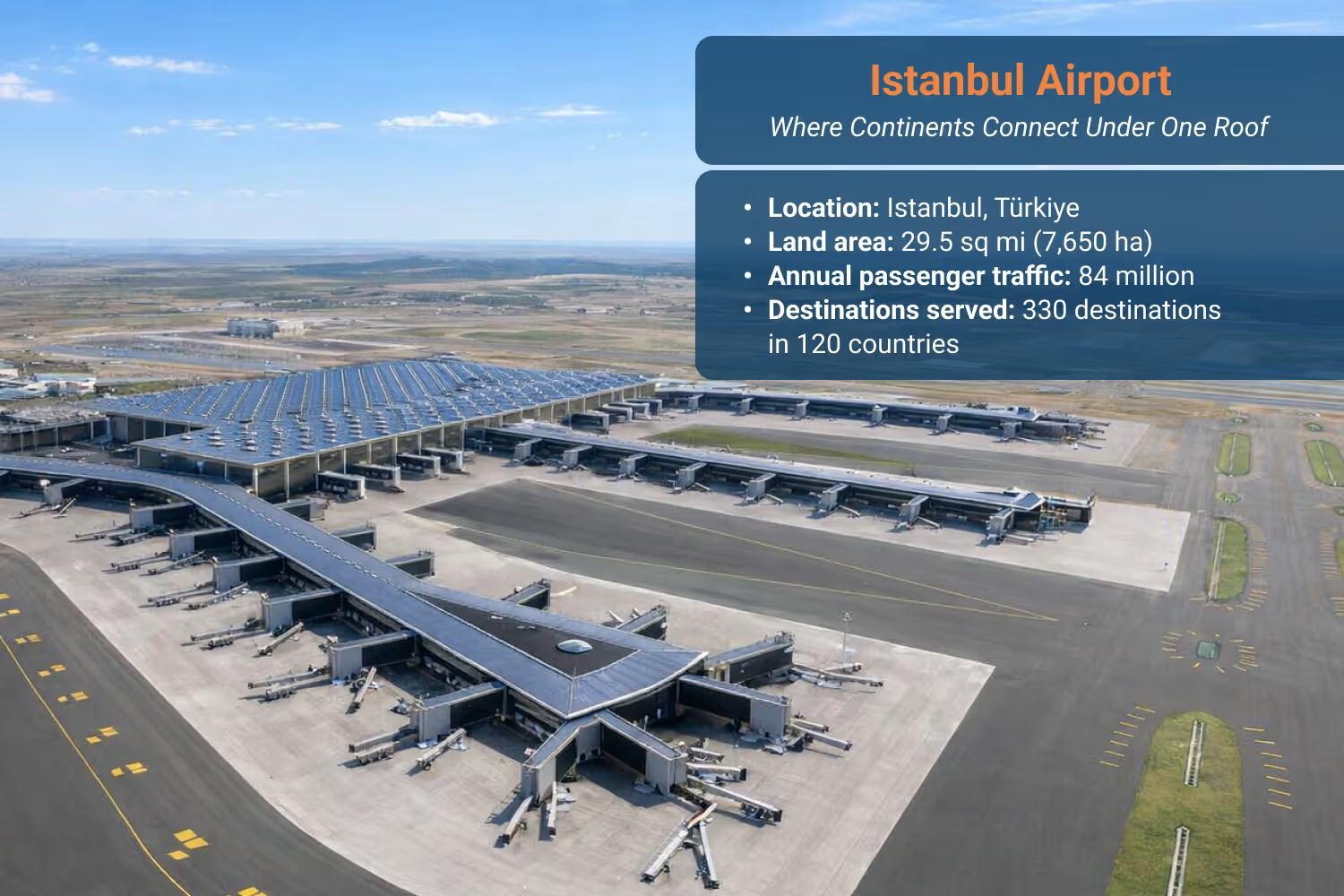
The in T眉rkiye was built on 29.5 square miles to serve traffic moving between Europe and Asia. Often branded as iGA Istanbul Airport, its vast single-roof terminal concentrates passenger movement under one structure. The terminal ranks among the largest airports in Europe.
- Location: Istanbul, T眉rkiye
- Land area:
- Annual passenger traffic:
- Aircraft movements: 547,000 flights (2025)
- Cargo volume: 5.5 million metric tons
- Number of runways: 5 (with triple-runway operations)
- Number of terminals: 1 integrated terminal under a single roof
- Destinations served: 330 destinations in 120 countries
- Construction period: 2014-2018 (4 years)
The Istanbul Airport has ranked as , ahead of hubs such as London Heathrow Airport and Paris Charles de Gaulle. It is also the first airport in Europe to operate three independent runways simultaneously. Only Atlanta Hartsfield-Jackson Airport in the United States shares this capability.
5. Dallas/Fort Worth International Airport: One of the World鈥檚 Most Extensive Airfields
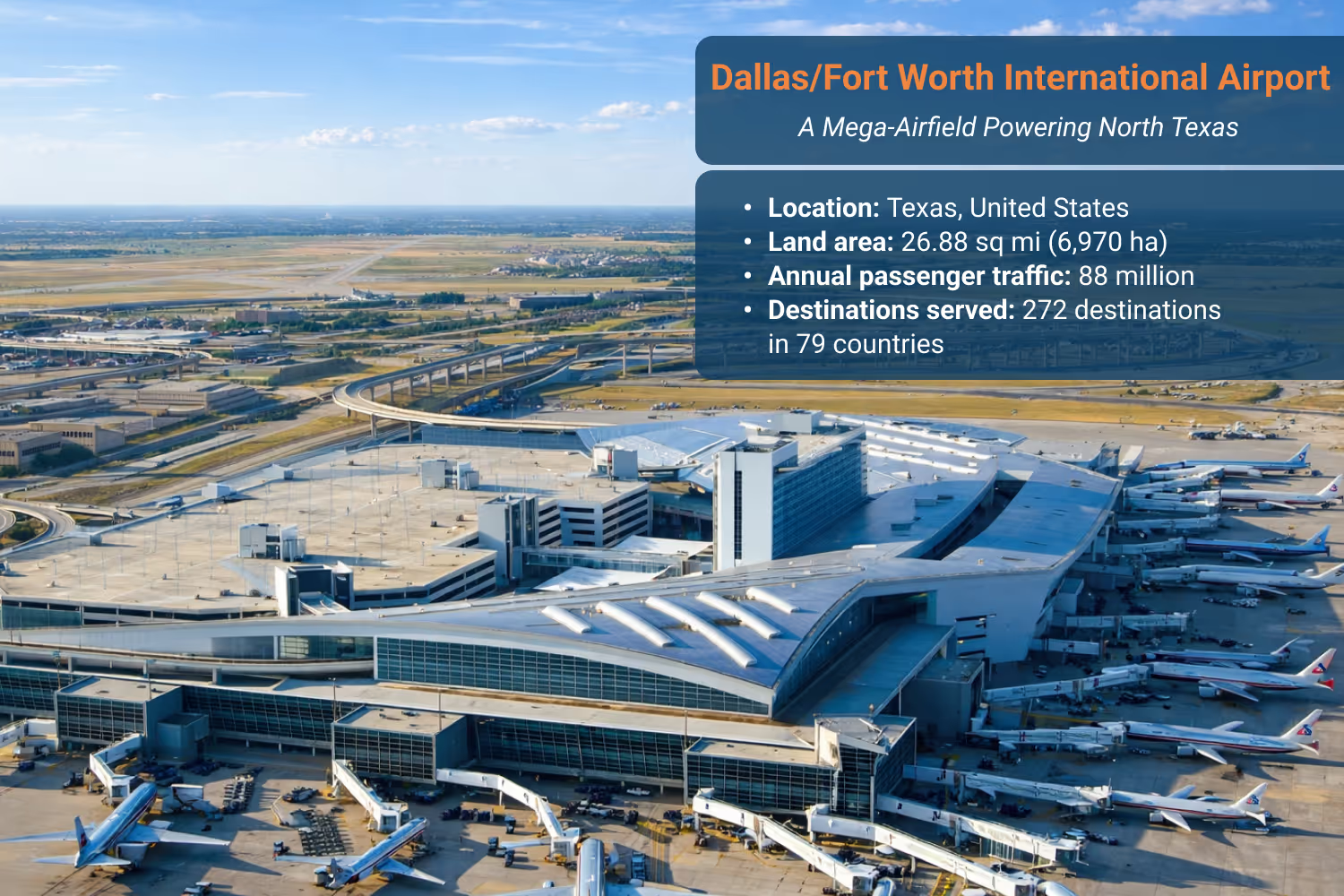
The in Texas, United States, covers 26.88 square miles and is the second-largest airport in the U.S. Multiple terminals, runways, and internal transport systems function together like an airport city. This layout allows traffic to flow across seven runways without pressure on surrounding communities.
- Location: Texas, United States
- Land area:
- Annual passenger traffic:
- Aircraft movements: 740,000 flights (2024)
- Cargo volume: 1 million metric tons
- Number of runways: 7
- Number of terminals: 5 passenger terminals linked by an internal transit system
- Destinations served: 272 destinations in 79 countries
- Construction period: 1969-1974 (5 years)
The Dallas/Fort Worth International Airport is the world鈥檚 largest and North America鈥檚 first carbon-neutral airport, setting a benchmark for large-scale aviation.
Long-term investment through the DFW Forward program continues to modernize terminals, airside systems, and passenger services. These investments strengthen DFW鈥檚 operations and support continued passenger growth.
6. Washington Dulles International Airport: Sprawling Gateway to the U.S. Capital

The , often called Dulles, in Virginia, United States, covers 18.75 square miles and serves as a long-haul gateway for Washington, D.C. Its remote setting allowed planners to prioritize airside efficiency over proximity. The layout supports wide-body aircraft and long-distance international routes.
- Location: Northern Virginia, United States
- Land area:
- Annual passenger traffic:
- Aircraft movements: 600,000 flights (2024)
- Cargo volume: 300,000 metric tons
- Number of runways: 4
- Number of terminals: 1 main terminal with midfield concourses
- Destinations served: 163 destinations in 48 countries
- Construction period: 1958-1962 (4 years)
Dulles plays a central role in international travel for the U.S. capital. Transatlantic routes account for much of its long-haul traffic. In February 2026, it drew national attention after reports linked its name to a . Despite the headlines, IAD remains a primary gateway to the U.S. capital.
7. Beijing Daxing International Airport: Starfish-Shaped Terminal Redefining Mega-Hubs

The in China occupies 18.1 square miles and features the world鈥檚 largest airport terminal at 7.5 million square feet. Its terminal, often called the 鈥�,鈥� is roughly the size of 98 soccer fields and stands out for its five concourses that extend from a central hub.
- Location: Beijing, China
- Land area:
- Annual passenger traffic:
- Aircraft movements: 322,500 flights (2025)
- Cargo volume: 205,000 metric tons
- Number of runways: 4 civilian runways (plus 1 military runway)
- Number of terminals: Single terminal with five radiating concourses
- Destinations served: 180 destinations in 25 countries
- Construction period: 2014-2019 (5 years)
The Beijing Daxing International Airport was built to handle northern China鈥檚 growing travel demand and to ease congestion at the capital鈥檚 older hub. The five-arm layout keeps passenger flow organized and reduces transfer times. As routes expand across Asia and intercontinental markets, PKX continues to grow into one of the region鈥檚 leading mega-hubs.
8. Orlando International Airport: Massive Airport Built for Volume
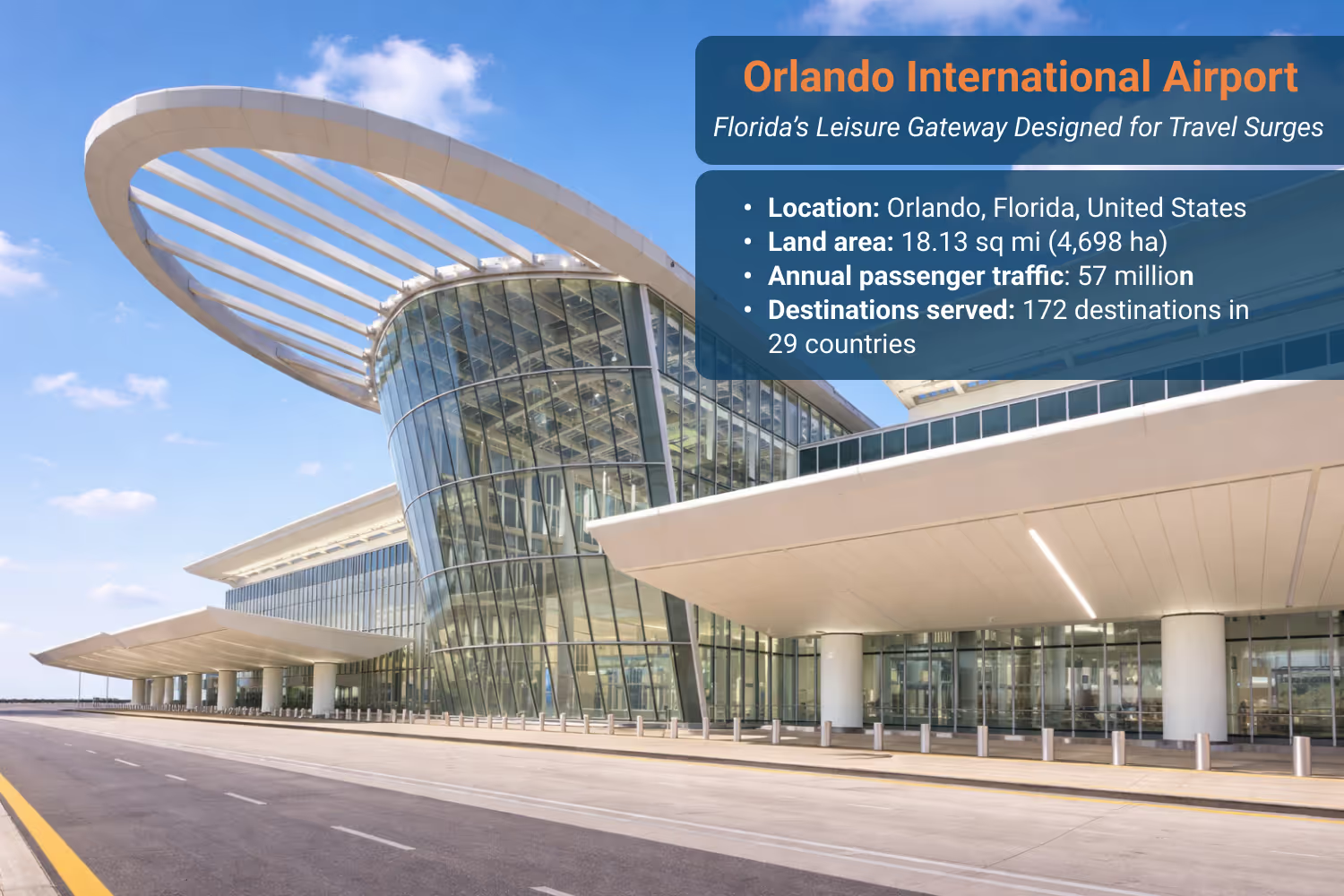
The in Florida, United States, spans 20.78 square miles to support year-round tourist travel. The airport handles steady traffic linked to theme parks, cruise ports, and conventions. MCO鈥檚 footprint is larger than the entire city of Miami Beach.
- Location: Orlando, Florida, United States
- Land area:
- Annual passenger traffic:
- Aircraft movements: 400,000 flights (2024)
- Cargo volume: 223,000 metric tons
- Number of runways: 4
- Number of terminals: 3 passenger terminals with integrated facilities
- Destinations served: 172 destinations in 29 countries
- Construction period: 1975-1981 (6 years)
The Orlando International Airport ranks among the busiest airports in the United States. Nonstop routes connect MCO to more than 160 destinations. It is also the only U.S. airport with a high-speed rail station. The links MCO to Miami and other cities along Florida鈥檚 east coast.
9. George Bush Intercontinental Airport: Houston鈥檚 Expansive Long-Haul Gateway
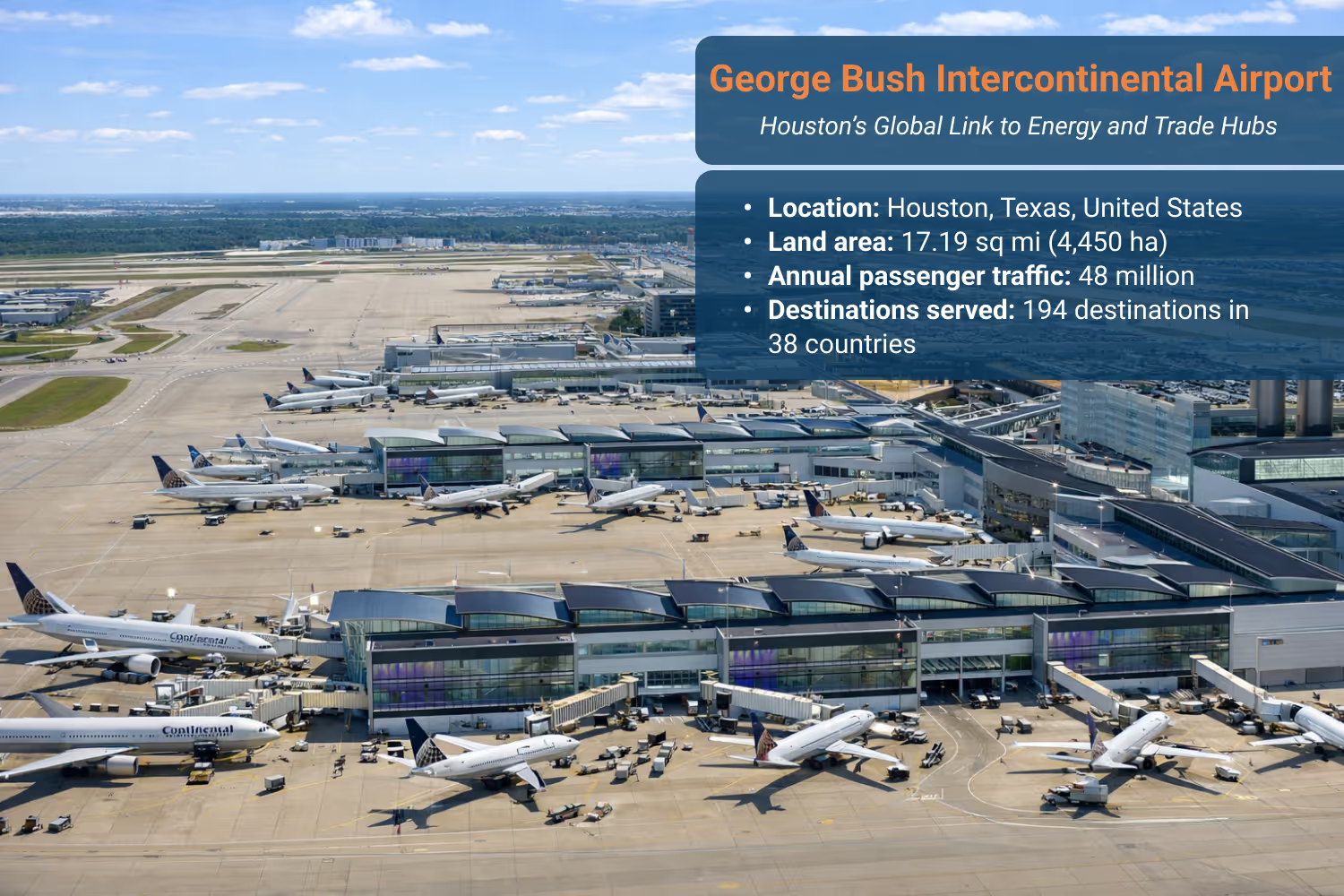
The in Houston, Texas, spans 17.19 square miles and anchors the region鈥檚 international air traffic. Wide runway spacing allows multiple long-haul departures within short intervals. Five terminals handle traffic across several continents. The airport鈥檚 size helps absorb rising international traffic more efficiently.
- Location: Houston, Texas, United States
- Land area:
- Annual passenger traffic:
- Aircraft movements: 447,000 flights (2024)
- Cargo volume: 552,300 metric tons
- Number of runways: 5
- Number of terminals: 5 passenger terminals with an internal people-mover and underground train
- Destinations served: 194 destinations in 38 countries
- Construction period: 1963-1969 (6 years)
The George Bush Intercontinental Airport connects Houston directly to energy markets and financial centers across the Americas, Europe, Asia, and the Middle East.
In recent years, this large airport has been part of a across Houston鈥檚 airport system. These upgrades improve capacity and efficiency in passenger processing.
10. Shanghai Pudong International Airport: Aviation Powerhouse Spread Across the Delta

The in China covers 15.40 square miles near the Yangtze River delta. It ranks as the second-busiest cargo airport in the world, just behind Hong Kong International Airport (HKG). The airport handles heavy passenger traffic alongside vast freight volumes. Its cargo throughput alone exceeds that of many national airports.
- Location: Shanghai, China
- Land area:
- Annual passenger traffic:
- Aircraft movements: 528,100 flights (2025)
- Cargo volume: 4 million metric tons
- Number of runways: 4
- Number of terminals: 2 main passenger terminals with satellite concourses
- Destinations served: 251 destinations in 48 countries
- Construction period: 1997-1999 (2 years)
During , Shanghai Pudong International Airport processed more than 2 million passengers in just eight days. That figure surpassed Hongqiao Airport during the same period. Pudong helped push Shanghai鈥檚 annual passenger traffic past 135 million, placing it among the world鈥檚 busiest airports.
11. Cairo International Airport: Africa鈥檚 Largest Airport by Land Area
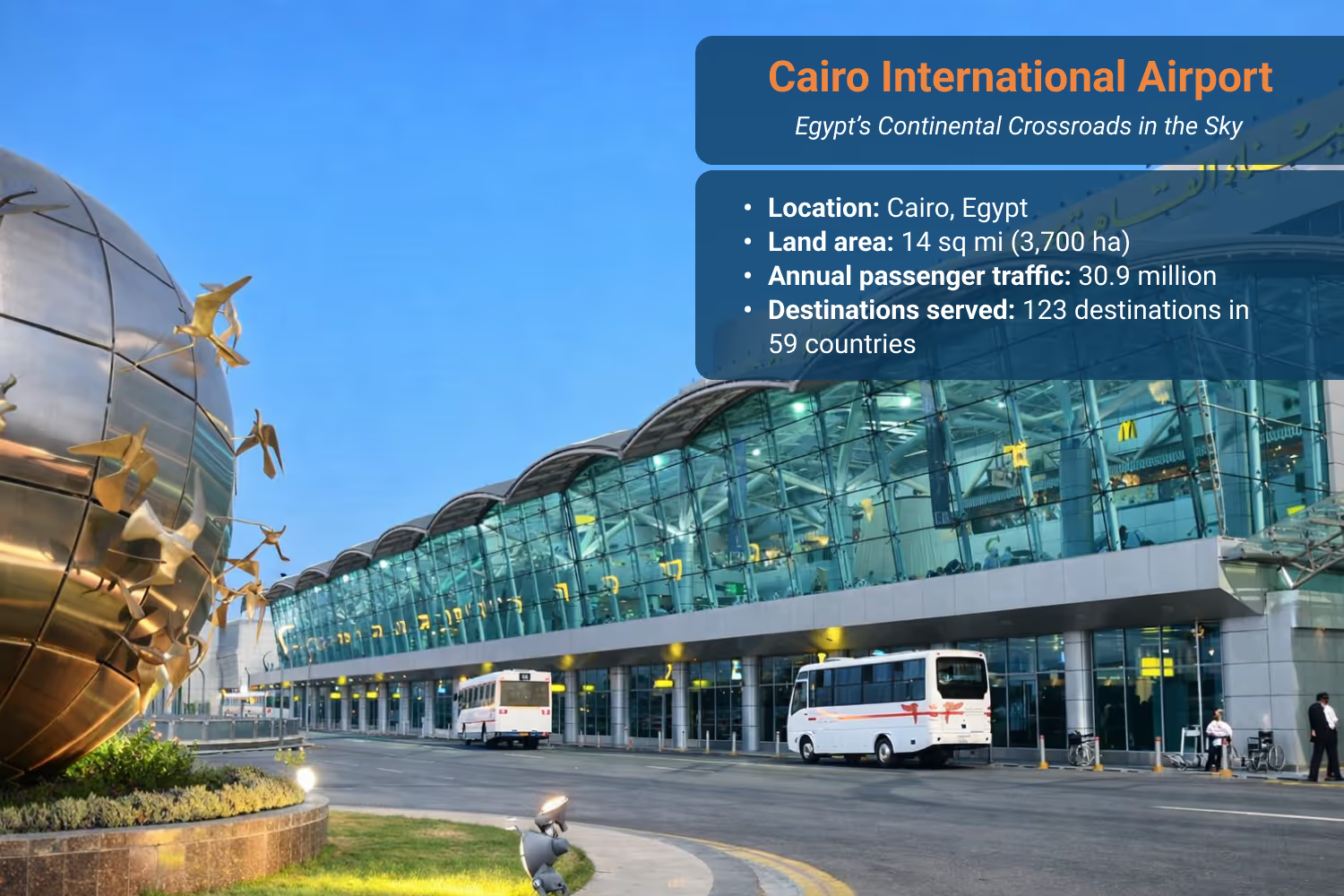
The occupies 14 square miles in central Cairo, Egypt, making it Africa鈥檚 largest airport by land area. Over time, new terminals and facilities have been layered onto its original footprint to keep pace with population growth. The airport鈥檚 position mirrors Cairo鈥檚 long role as a meeting point for continents and cultures.
- Location: Cairo, Egypt
- Land area:
- Annual passenger traffic:
- Aircraft movements: 224,303 flights (2025)
- Cargo volume: 340,000 metric tons
- Number of runways: 3
- Number of terminals: 3 main passenger terminals
- Destinations served: 123 destinations in 59 countries
- Construction period: 1957-1963 (6 years)
The Cairo International Airport remains one of Africa鈥檚 busiest aviation hubs, linking the continent with Europe, the Gulf, and Asia. Recent terminal upgrades have focused on improving passenger flow and handling rising traffic. Today, the CAI continues to serve as Egypt鈥檚 main gateway to the world.
What the World鈥檚 Biggest Airports Tell Us About the Future of Aviation
The world鈥檚 biggest airports reflect long-term land planning and expanding aviation networks. Several large projects already in development, including the , could challenge today鈥檚 biggest as air networks continue to expand.
These large sites give airports the space to diversify and adapt over time. Airports expand by adding runways, terminals, cargo zones, and rail links. The biggest airports in the world reveal how global aviation is being redefined for decades ahead.

Written by
Stephanie Flores
Stephanie is an Assistant Content Writer at 91爆料, contributing clear, well-researched content. She brings a background in SEO writing and academic research, with a focus on accuracy, structure, and editorial quality. Steph's work helps ensure 91爆料鈥檚 content remains reliable, practical, and easy to follow for construction professionals.

Contributions by


Capital Project Management Plan Template
Free Capital Project Management Plan Template! Streamline the planning, management, and delivery of large-scale projects while ensuring alignment, tracking progress, and mitigating risks effectively.

Walk Into Every Meeting With Confidence, Clarity, and Control
No one wants to look unprepared, blindsided, or uncertain in front of stakeholders 鈥� but that鈥檚 exactly what happens without 91爆料.
Start for FreeTrusted by the bold, the brave, and the brilliant across governments, Fortune 500s, and the world鈥檚 best in delivering the future