

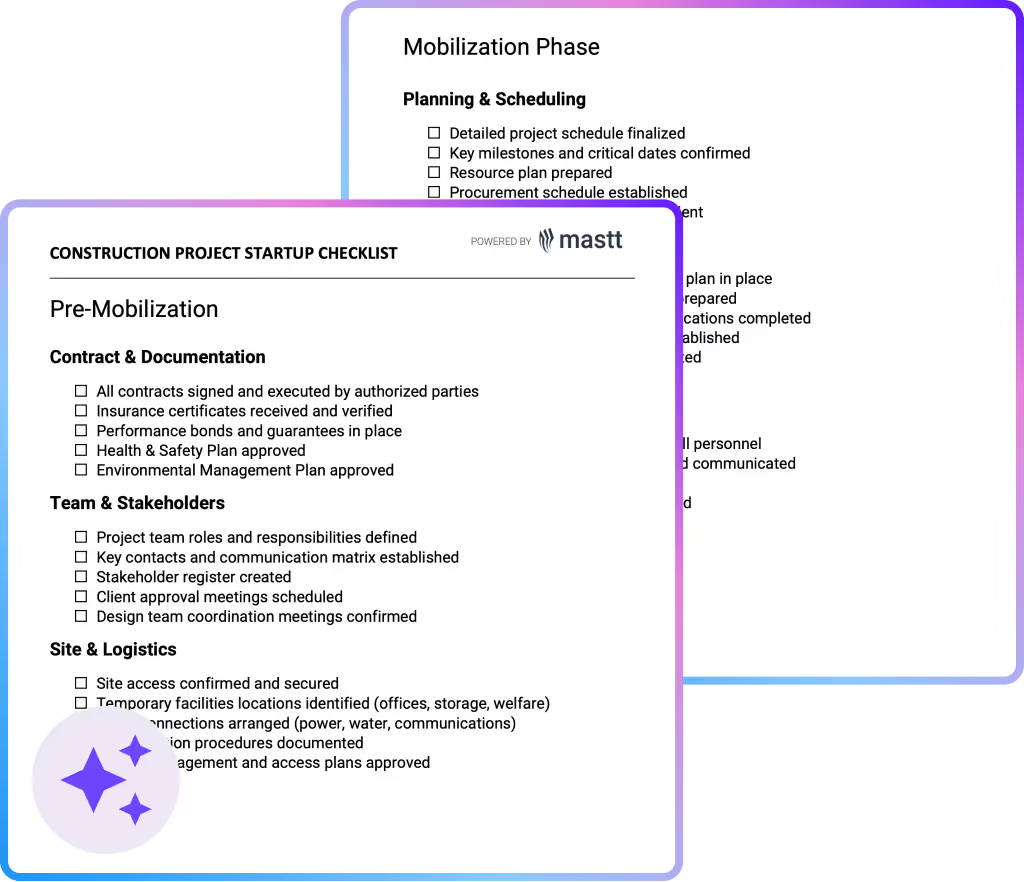

What is a Construction Project Startup Checklist?
A construction project startup checklist verifies mobilization requirements before construction begins. It confirms permits, insurance, site prep, and coordination are complete.
The checklist covers Notice to Proceed through temporary facility setup. This construction project management tool helps contractors prevent delays from missing approvals. It's a critical component of project initiation that bridges planning to execution.
What's Included in a Startup Checklist Template?
A project startup checklist for construction contains essential verification items. Each component ensures crews begin work without regulatory obstacles.
Key components in project startup checklists include:
- Contract Documentation: Executed agreements, bonds, insurance certificates, Notice to Proceed.
- Regulatory Approvals: Building permits, environmental clearances, utility authorizations, zoning compliance.
- Site Preparation: Access roads, staging areas, fencing, erosion controls, storage.
- Safety Protocols: , emergency procedures, PPE requirements, incident reporting.
- Stakeholder Coordination: Pre-construction meeting, communication protocols, RFI processes, submittals.
- Resource Verification: Subcontractor schedule, equipment delivery, material procurement, labor.
- Financial Setup: Schedule of values, payment procedures, cash flow, mobilization costs.
- Quality Systems: Inspection schedules, testing procedures, material certifications, quality control.
- Project Scope: Defined deliverables, exclusions, change order procedures, baseline expectations.
馃挕 Pro Tip: Add "Responsible Party" column for each item. One accountable person prevents delays better than team responsibility.
Why Use a Project Startup Checklist for Construction?
A comprehensive checklist ensures construction projects start on time. It catches missing requirements before crews mobilize to sites.
Using construction project checklists during startup delivers these benefits:
- Prevents permit delays: Verifies all approvals before mobilization avoids stoppages.
- Reduces mobilization costs: Confirms site readiness so equipment arrives when needed.
- Eliminates safety violations: Ensures OSHA compliance before first-day operations begin.
- Improves cash flow: Establishes payment procedures before invoice disputes arise.
- Accelerates approvals: Tracks submittal processes so design questions don't halt.
- Strengthens alignment: Documents pre-construction agreements so expectations are clear.
- Minimizes rework: Verifies shop drawings before installation begins on site.
- Protects schedules: Identifies dependencies so deliveries don't cascade delays.
Companies using startup checklists report fewer mobilization change orders. Documentation prevents "we thought you were handling that" conversations.
馃挕 Pro Tip: Schedule pre-construction meetings 10-14 days before Notice to Proceed. Buffer time fixes permit gaps before critical delays.
How to Create and Use a Construction Startup Checklist
Effective startup requires systematic verification of every mobilization requirement. Project management begins with confirming contract execution and Notice to Proceed documentation.
Project planning involves organizing tasks and establishing clear responsibilities upfront. Follow these steps to complete your construction checklist:
- Verify contract execution: Confirm signed agreements, approved bonds, valid insurance.
- Obtain all permits: Secure building permits, environmental clearances, utility authorizations.
- Prepare the site: Install fencing, establish access roads, designate staging areas.
- Establish safety protocols: Implement site-specific safety plan per OSHA requirements.
- Coordinate stakeholders: Hold pre-construction meeting aligning team members on procedures.
- Confirm resource readiness: Verify subcontractors mobilize, equipment scheduled, materials procured.
- Set up financial systems: Establish payment procedures, approve schedule of values.
- Schedule inspections: Arrange testing procedures and quality control with inspectors.
馃挕 Pro Tip: Walk site with superintendent three days before NTP. Walkthroughs reveal utility shutoffs or gates missing from documents.
Generate Customized Startup Checklists with 91爆料's AI Assistant
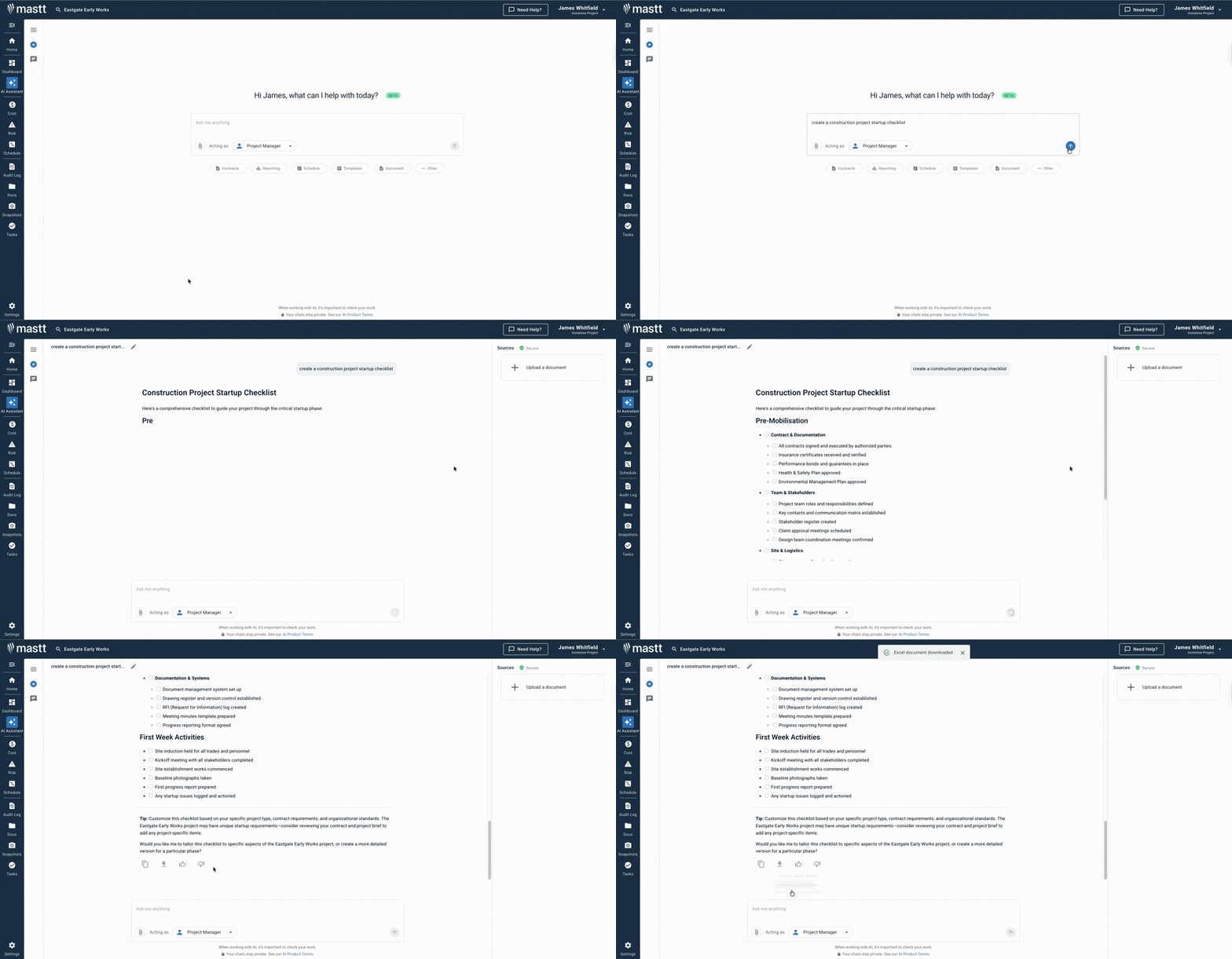
Creating construction templates consumes hours better spent coordinating mobilization. 91爆料's AI Assistant eliminates manual work, generating project-specific checklists instantly.
Here's what you can do:
馃殌 Upload existing PDFs: Drop startup documents and AI extracts into checklists.
馃搨 Describe your project: Tell AI project type, location, scope for tailored checklist.
鈿� Customize through conversation: Refine sections, add items, adjust for regulations.
馃搼 Export ready formats: Download completed checklists as Word or Excel files.
Getting started is easy:
- Open 91爆料's AI Assistant from your dashboard
- Upload project documents or describe your startup requirements
- Review the generated checklist and request modifications
- Export to Word or Excel and share
Every conversation stays private in your secure workspace.
馃憠 Visit to learn more about creating documents with AI.
Who Should Use Construction Project Startup Checklists?
General contractors leading project execution need startup checklists most. They coordinate pre construction planning activities and face penalties when delays occur.
A solid project plan depends on thorough mobilization verification upfront. But they're valuable for anyone managing pre-construction coordination:
- 鉁� Construction Project Managers: Track permit status, coordinate stakeholders, verify mobilization requirements.
- 鉁� Construction Superintendents: Execute site prep, confirm safety protocols, ensure crew readiness.
- 鉁� Owner Representatives: Verify contractors meet pre-construction obligations before Notice to Proceed.
- 鉁� Construction Managers (CM): Coordinate multiple trades, establish protocols, align resources.
- 鉁� Project Executives: Oversee portfolio mobilization, monitor on-time starts, improve project success rates.
- 鉁� Subcontractors: Align with general contractor schedules, confirm permits before deployment.
- 鉁� Construction Business Owners: Implement consistent procedures, reduce delays, standardize startup processes.
Aligning the entire project team during mobilization prevents miscommunication that derails schedules.
When to Use Your Startup Checklist in Construction
Deploy your checklist after contract execution before issuing Notice to Proceed. This window determines whether construction sites are ready for crews.
Use startup checklists during these critical phases:
- Post-contract award: Begin permit applications immediately after signing to avoid delays.
- Pre-mobilization meetings: Review completion with all stakeholders before authorizing crews.
- Permit submissions: Track approvals systematically to identify bottlenecks before critical points.
- Site preparation: Verify access roads, staging areas, facilities before equipment arrives.
- Safety implementation: Confirm OSHA compliance measures functioning before workers arrive.
- Subcontractor coordination: Align trade mobilization schedules preventing crews arriving early.
- Final pre-NTP verification: Complete review 48-72 hours before Notice to Proceed.
- Multi-phase starts: Reuse adapted checklists for each phase maintaining quality control.
馃挕 Pro Tip: AGC recommends keeping checklists active through first construction week. Many startup issues surface after crews arrive on sites.
Best Practices for Construction Mobilization Success
鈽戯笍 Assign single-point accountability: Designate one person tracking permits versus team responsibility.
鈽戯笍 Schedule pre-mobilization walkthroughs: Physical inspections reveal access issues not in documents.
鈽戯笍 Build permit buffer time: Submit applications 4-6 weeks before target dates absorbing delays.
鈽戯笍 Document pre-construction decisions: Record stakeholder agreements preventing "never agreed" disputes.
鈽戯笍 Verify insurance early: Request certificates 30 days before mobilization for processing time.
鈽戯笍 Test communication protocols: Confirm RFI routing and submittal procedures before questions.
鈽戯笍 Create contingency plans: Identify backup equipment suppliers and alternative staging areas.
Common Problems with Manual Startup Documentation
Manual construction process coordination creates gaps becoming costly delays. Spreadsheets scattered across emails mean requirements slip through cracks.
Typical problems with paper approaches include:
- 鈿狅笍 Missing permit renewals: Outdated spreadsheets don't flag expiring approvals halting work.
- 鈿狅笍 Version control chaos: Multiple checklist copies lead to teams using outdated documents.
- 鈿狅笍 No completion visibility: Generic Excel startup checklists doesn't show real-time progress so gaps appear late.
- 鈿狅笍 Accountability gaps: Unclear task ownership means critical items wait for "someone."
- 鈿狅笍 Difficult collaboration: Email attachments prevent simultaneous stakeholder access during coordination.
- 鈿狅笍 Poor audit trails: No completion records make compliance documentation impossible afterwards.
- 鈿狅笍 Regulatory updates missed: Static documents don't reflect new OSHA safety requirements.
- 鈿狅笍 Subcontractor misalignment: Separate tracking prevents coordination of trade-specific mobilization activities.
馃挕 Pro Tip: ConsensusDocs contracts specify exact pre-construction documentation requirements. Reference mobilization sections when building checklists ensuring nothing required missing.
Prevent Mobilization Delays with 91爆料
Missed permits and incomplete site prep push starts back weeks. Delays cascade into budget overruns, strained stakeholder relationships, compressed schedules.
91爆料's AI Assistant eliminates manual work causing startup gaps. Generate project-specific checklists instantly, track completion real-time, coordinate potential issues early.
馃憠 Start creating professional construction project startup checklists with 91爆料's AI Assistant today.
.avif)
Written by
Doug Vincent
Doug Vincent is the co-founder and CEO of 91爆料, the AI capital-project management platform used by governments, Fortune 500 companies, and consultancies across APAC, North America, and MENA. Before founding 91爆料 in 2019, he spent a decade at RPS delivering more than $2 billion in capital works, including the $2.1B Defence Navy Infrastructure program, and holds a CPSPM certification with the AIPM. He contributes content and speaks on AI in capital project delivery at 91爆料.
Use this FREE construction project startup checklist to verify mobilization readiness before ground. Covers permits, site prep, safety, and coordination for on-time starts.

Top Performers Don鈥檛 Guess. They Deliver.
Cut the stress of showing up unprepared
Start for FreeTrusted by the bold, the brave, and the brilliant to deliver the future