

.avif)
![Construction Cost Estimator [100% FREE Calculator]](https://cdn.prod.website-files.com/607f739c92f9cf647516b37b/67c0fa1d9a56de2ac61fe0ed_construction-cost-estimator.avif)
What Is a Construction Cost Calculator?
A construction cost calculator is a specialized tool that estimates how much money a building project will cost. This online construction cost calculator helps you know all expenses before you start building. Whether planning a residential construction project or commercial building, this tool shows costs for materials, workers, equipment, and other needs for your construction project.
- Materials: Calculates how much concrete, steel, bricks, and other materials you need.
- Workers: Shows how many hours different workers like builders, electricians, and plumbers will take.
- Equipment: Includes costs for machines and tools needed on site.
- Other costs: Covers permits, insurance, design costs, and project management.
- Time: Calculates how long the project will take to complete.
A free construction cost estimator helps prevent surprise expenses during building. It gives you a clear picture of all costs so you can plan your budget better. This home construction cost calculator considers your project type, quality level, location, and site conditions to give accurate estimates for your specific building project. Many people also use it as a house construction budget calculator for early planning.
You can also use it as a residential construction cost per square foot by zip code calculator. Just enter your local cost per square foot, or start from your state's 2026 baseline in the tool, and the estimate adjusts to your area.
How to Use This Calculator to Estimate Construction Cost
Using this construction cost estimator is straightforward. The tool guides you through entering your project details and then calculates all construction costs automatically. Follow these steps to get an accurate estimate for your construction project.
- Enter your project size: Type the area of your construction project in square feet or square meters.
- Set your cost per square unit: Enter your local rate and currency, or select your US state to prefill a 2026 baseline cost.
- Select project type: Residential, commercial, industrial, institutional, healthcare, educational, or hospitality.
- Choose quality grade: Economy, standard, premium, or luxury finishes.
- Enter number of floors: Multi-storey projects cost more per square foot to build.
- Set location and site conditions: Urban, suburban, or rural, and whether the site is flat, sloped, or difficult.
- Choose structural system: RCC frame, load-bearing, steel, timber, or prefabricated.
- Set project complexity: Then open Advanced Options to fine-tune foundation, roof, HVAC, sustainability features, contingency, and design fees.
Click Calculate Estimate to see your total project cost, cost per unit area, and construction timeline, with detailed tabs covering materials, labor, cost analysis, regulatory costs, and sustainability. Adjust any input and recalculate as your plans change, or print the full report to share with contractors and lenders.
馃挕 Pro Tip: Use this calculator for initial feasibility, then move your baseline into construction project cost management software so you can automatically validate contractor bids against your projected costs.
How to Estimate Construction Costs
Estimating construction costs accurately requires a systematic approach that considers all aspects of your building project. Following these steps will help you create a reliable budget for your construction work. This process combines basic measurements with industry knowledge to predict your total expenses.
- Measure your project area: Calculate the total square footage or square meters of the planned build.
- Define the scope and break it into phases: Site preparation, foundation, framing and structure, MEP (mechanical, electrical, plumbing), and finishes.
- Price materials and quantities: Research local rates for concrete, steel, lumber, and masonry, then calculate how much of each your measurements require.
- Estimate labor and equipment: Apply local trade rates for each phase and add machinery or tool costs.
- Add permits, fees, and soft costs: Building permits, plan review, design fees, and insurance for your jurisdiction.
- Add a contingency: Include an extra 10-15% contingency budget for unexpected costs, then sanity-check your total against similar projects in your area.
"Construction companies run at 5 to 10% margin. If you have a 5 to 10% error on your estimate, that's your profit margin gone."
- Timothy Fairley, Founder of ConstructIQ
Using a digital residential construction cost estimator saves significant time and improves accuracy. While manual calculations can take hours or days, an online tool like this one processes complex formulas instantly and considers factors you might overlook.
Regular updates to your estimate throughout your project will help you stay on budget and make informed decisions about your new construction project.
馃挕 Pro Tip: When estimating labor and materials, enter these figures directly into construction budget software so future progress payment requests are instantly verified against your established line items.
Construction Cost per Square Foot by State
Use these 2026 state baselines to set the cost per square unit in the calculator above. They are the same standard-grade residential figures the calculator's state dropdown prefills. If you need a construction cost estimator by zip code, start from your state baseline and adjust within about 15% for local labor and material rates.
Note: Baselines compiled from published US build-cost data, including the and , rounded to the nearest $5.
"If you have really good data, you can be very confident that things will fall within a certain range."
- Timothy Fairley
Commercial Construction Cost per Square Foot
Commercial projects price differently from residential because structure, MEP systems, and fit-out dominate the budget. Use these national ranges as a starting point in the commercial construction cost estimator above. Just select Commercial as the project type and enter a rate from the range that matches your building.

Written by
Jefbeck Eje
Jefbeck is an SEO Specialist at 91爆料 who creates optimized content for the construction project management industry. Focused on delivering accurate and actionable insights, Jef combines SEO expertise with industry knowledge to enhance visibility, build authority, and drive engagement. His work ensures 91爆料 remains a trusted resource for construction professionals seeking reliable information.

Contributions by
Timothy Fairley
Timothy Fairley is the Founder of ConstructIQ and a Chartered Professional Engineer and PMP with 9 years delivering construction projects across renewable energy, rail, and infrastructure. He trained over 50,000 construction professionals worldwide through ConstructIQ鈥檚 courses and YouTube channel on estimating, procurement, and contract management. Timothy contributes content on construction cost management and estimating at 91爆料.
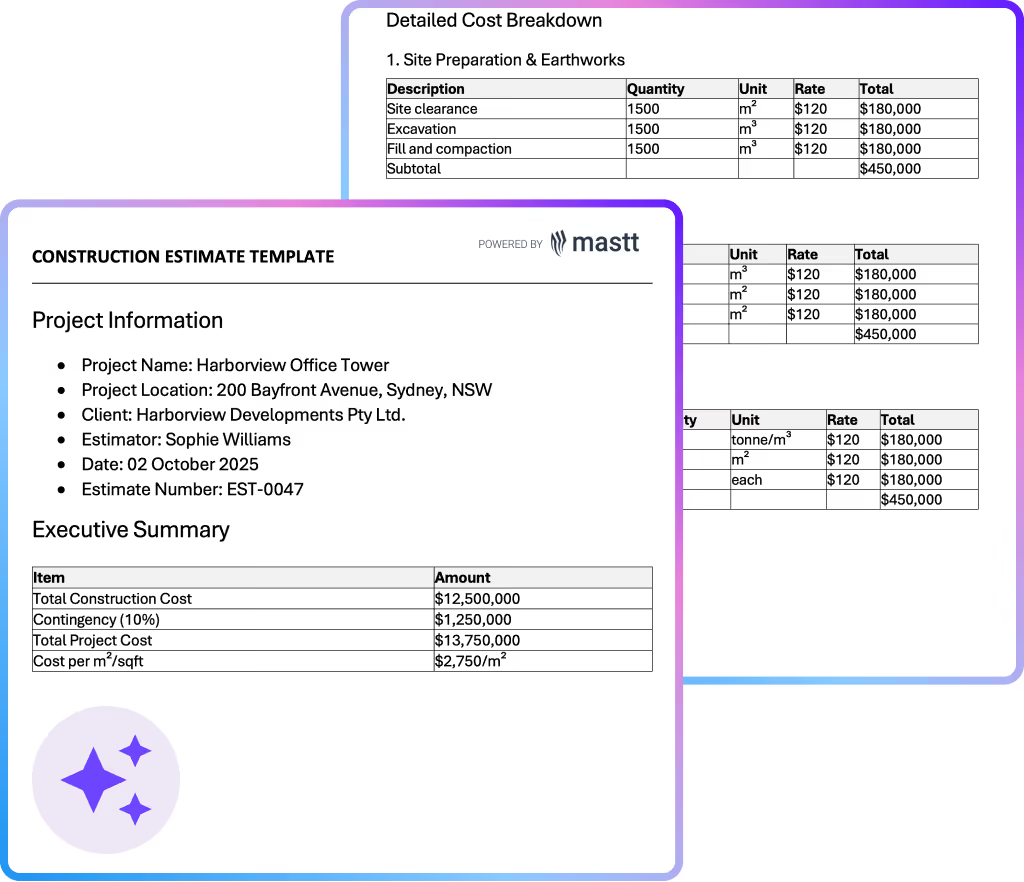
Construction Estimate Template
Use this construction estimate template to price projects accurately, win more bids, and control costs. Create professional estimates in Excel or Word format instantly.

Walk Into Every Meeting With Confidence, Clarity, and Control
No one wants to look unprepared, blindsided, or uncertain in front of stakeholders 鈥� but that鈥檚 exactly what happens without 91爆料.
Start for FreeTrusted by the bold, the brave, and the brilliant across governments, Fortune 500s, and the world鈥檚 best in delivering the future